And a henna stand.
That was just a plain plastic table, henna tubes in a bag, four chairs behind it, and a length of butcher’s paper with “free henna!” in cut-out letters, surrounded by cut-out patterns. The guy sitting at the table, hennaing people, had a drawing style uninhibited by the rigors of aestheticism. His butterflies could easily be mistaken for dogwood flowers. His lotuses were a couple chicken scratches on a vine.
I did not want a chicken-scratched vine running down my arm, but I did want henna done. So I asked the guy, “do you mind if I do my own?” He just nodded and went on drawing.
So I dropped my stuff on the table, grabbed a tube of henna, and set to work.
~:~
It’s a simple mix. A couple spoons of lemon or lime juice. A bit of sugar. A few drops of essential oils (eucalyptus is popular). And a cup or so of powdered henna leaves. Mix, let set for half a day, and you have henna.
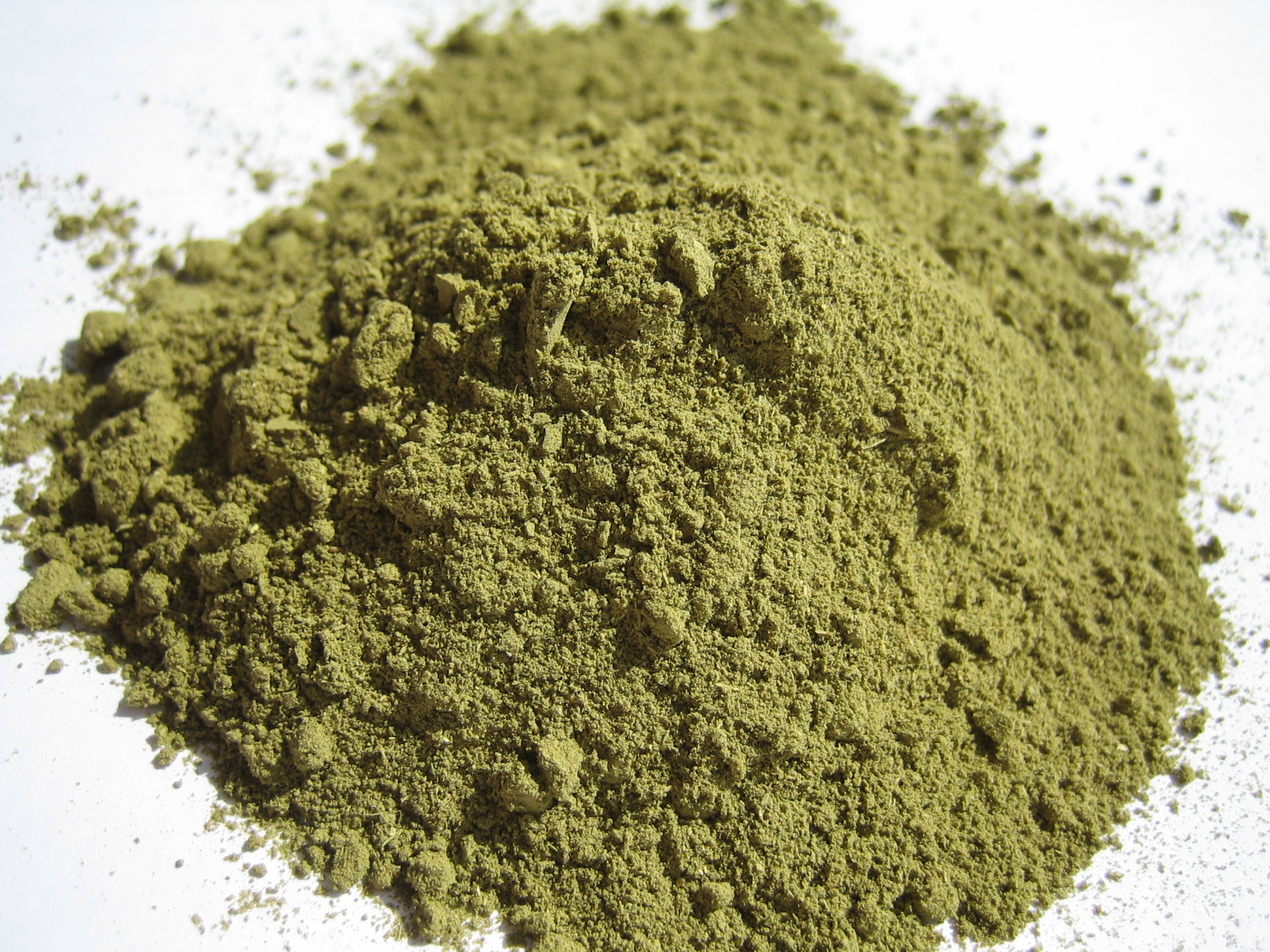
This paste has been used for skin and hair dye for millennia. The science behind it is that lawsone molecules – the orangish coloring agent in henna leaves – are released by contact with acid (hence the lemon/lime juice). The settling period of 12 to 24 hours lets this process happen, and so when henna is applied, it stains fast and stays.
It is a very human trait to decorate oneself, and henna decorations last for weeks. Once applied, stains show after a few minutes; for the best results, henna should be left on for a couple hours, until it gradually dries, cracks, and peels off. The stain darkens over the next few days, from orange to deep red-brown. Swimming or washing make the stain come off faster; heating or steaming make the stain darken and stay longer.

~:~
I was deeply absorbed in hennaing when a group of girls came to my side of the table. “Are you open?”
I looked up. “Huh?” and then, realizing that, since I was holding a henna tube, they thought I worked here, “oh. Well, I just sat down and started…”
“Can you do henna for us?”
I made a face, then looked over at the guy. He looked up from his current customer, looked at the girls, looked at me, shrugged, and nodded.
“Okay,” I told them.
After that, I became a second line. People joined up behind the girls, and then behind those people. I got requests for everything from letters to flowers to tiny feet on a person’s ankle. People just kept joining the line. Very few asked whether I was a volunteer or not – although, after a fashion, I suppose I was.
I became more popular than the henna-guy. People started joining my line instead of his. They’d look at his patterns and screw up their faces, then look over my shoulder and say, “hey guys! lookat these!” and move their friends from his line to mine. One girl had hers, a leafy lotus, done by me, while her friend’s was done by the guy. They compared afterwards, and the friend made envious noises. “Lookat this,” she said, pointing at her own wrist. “I don’t even know what this is. Is it like some kinda Christmas tree?”
~:~
Henna is most often used for two things: dying hair, and dying skin. The former is fairly straightforward. The latter, though, is the henna most people are familiar with. It is the henna that is put into tubes or cones and squeezed onto a person’s skin in elaborate patterns that, when left to dry, stay for weeks, sometimes nearly a month.

Henna is traditionally applied for weddings and celebrations, but in America it has become attractive as a safe, natural, temporary body art. Patterns here are found not just as the traditional stylized plant and leaf motifs, but also as tattoo-shapes, lettering, and all manner of odd designs. As with any other body art, the variety is endless. Henna can be found online for reasonable prices or in craft stores for exorbitant ones; once bought, all that’s needed is to mix it and then apply it.

~:~
In the end, I was hennaing from 6pm until when we ran out of henna – three hours later. There were all kinds of people - sorority girls, fraternity guys, an Indian family, a bunch of black girls who kept telling their friends to come over to my side. A tall black girl wanted my leaf pattern "tattooed on her navel". She laughed about it, but when I was drawing she kept entirely still; that was the hardest one to draw, since I didn't have anything to rest my hand on and the henna tube in my hand was leaking.
The very last people to come up were two guys. I showed then the empty tubes and said, "sorry, we're out."
"Aw, can't you do, like, just one letter?"
There was enough henna for that. "What letter?"
"Right here," said one of them, pointing to his forearm. "Can you write ‘B’?"
I obliged.
"So you want 'A'?" I asked the next guy. He laughed and nodded.


